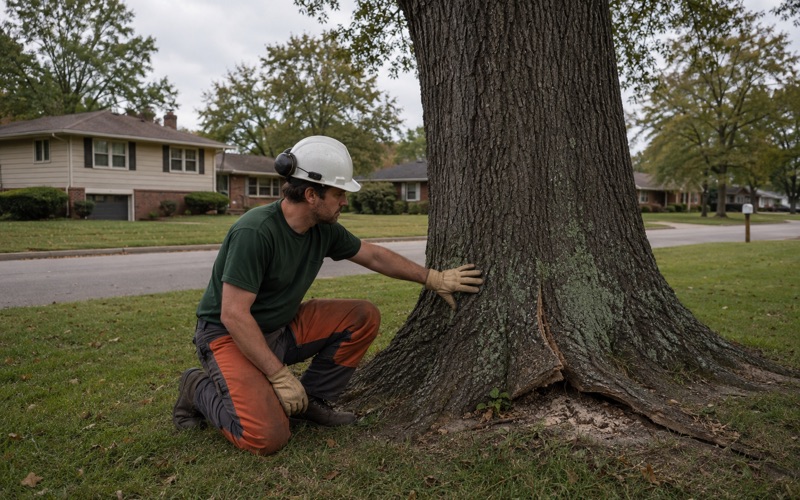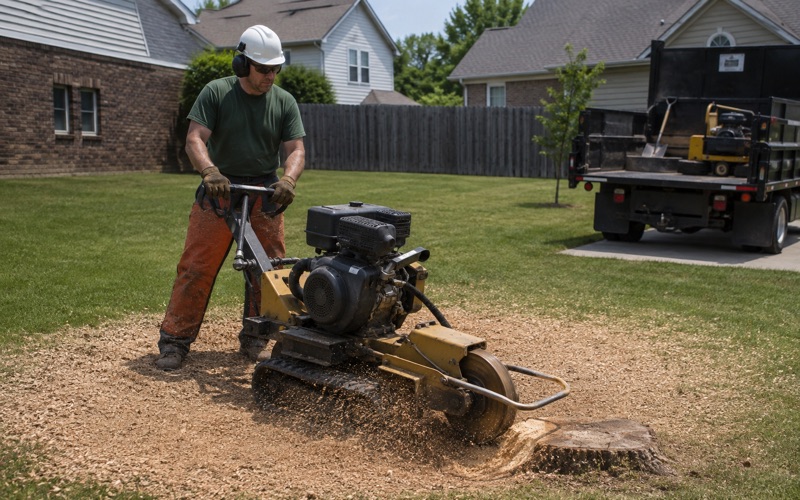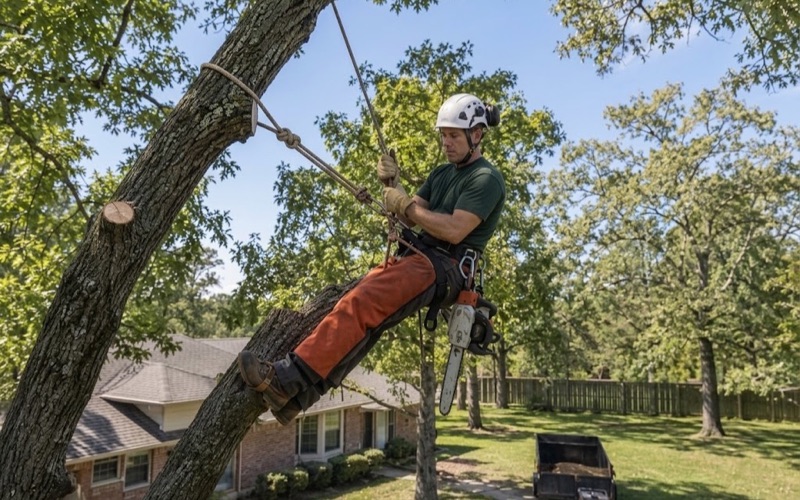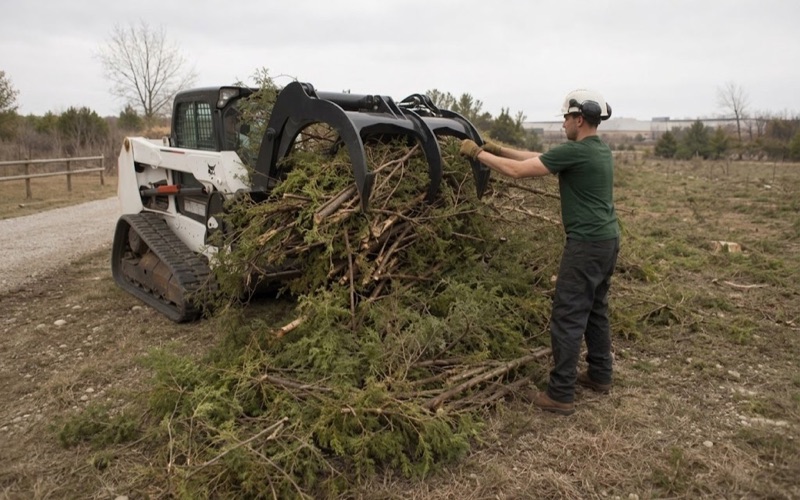
Smyrna Tree Removal handles tree removal in Oak Hill, Tennessee, and we have been doing this work across Middle Tennessee for more than twenty years. Oak Hill is one of the addresses in our service area where the paperwork arrives before the equipment does: the city issues its own tree removal permit, and that permission is granted for identified trees rather than handed to a property once.
So the first thing we settle on an Oak Hill quote is which standards the lot falls under and how many trees the request actually covers. A homeowner calling about three declining trees near the driveway is asking about three permitted removals, and that shows up in the timeline more than in the price. We read the ordinance for the city the tree actually stands in, because our service area crosses six counties and the answer changes at the line.
We also put the inclusions in writing before anyone starts — the trunk rounds, the stump, the grindings and the chips — so that what the city approved and what you see in the yard afterward describe the same job.
A permit granted tree by tree
Oak Hill adopted its own tree management and protection rules as Part 9 of Chapter 14 of the municipal code, sections 14-901 through 14-909, effective October 25, 2022 and amended since by Ordinance 2023-04 and Ordinance 2024-06. The operative sentence is short: until and unless a tree removal permit is issued, there shall be no removal of trees from any lot to which the Tree Protection Standards apply. The permit is counted per tree, so an application covering four trees is a different transaction from one covering a single stem, and we scope it that way from the first visit.
The remedy matters as much as the requirement. Where trees are removed from a lot in violation of sections 901 through 909, the city may require the owner of the lot to comply — the obligation lands on the property owner, not on the crew that ran the saw. We would rather spend an extra week getting an application right than hand a client that conversation.
The Board of Commissioners adopts and administers this code from the city offices on Franklin Pike. Oak Hill incorporated in 1952, just before the Nashville and Davidson County governments merged, and it kept its own zoning authority through that merger, so the standards that govern the trees on your lot are the city’s own.
What the tree protection standards ask for
The retention standard is a share, not a headcount: a minimum of 54 percent of predevelopment tree canopy cover must be retained and protected. An applicant can appeal for a variance where satisfying that is clearly impractical, but the starting position is that most of the canopy stays.
There is also a frontage rule with a hard number in it. Trees standing between a building, proposed or existing, and the adjacent right-of-way of a primary or secondary street must be preserved at eight inches diameter at breast height or greater, with DBH defined as the diameter measured four and a half feet above existing grade. Those are frequently the exact trees a homeowner wants gone, so we measure them at the estimate rather than at the permit desk.
Where trees are being kept through construction, orange plastic barrier construction fencing goes up at the limits of the tree preservation areas before work begins, and the city reviews and approves that before the grading permit issues. The fence line goes in before machinery arrives, not after.
Looking for tree-removal closer to Forest Hills? See Tree-Removal in Forest Hills.
A city that publishes what a tree owner may and must do
Oak Hill puts its own statement of tree owner rights and responsibilities in front of residents rather than leaving them to read the code cold, which is not something every city here does. It makes the first conversation shorter and changes its shape: the question stops being whether a permit applies and becomes which trees are on the application and what the city will want to see about them.
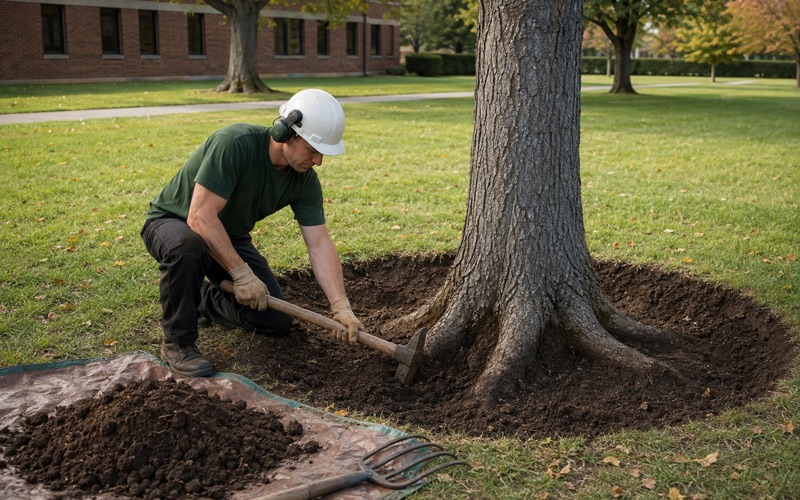
The responsibility running the other way is preservation, and it is worth taking seriously before an application is written. A protected frontage tree that is declining rather than dying can often be kept: root collar excavation with an air spade to find what is buried at the flare, soil decompaction where equipment or years of traffic have sealed the root zone, and crown cleaning to take out the deadwood without reducing the canopy the city is counting.
When a written report does the work
For a tree whose condition is the reason for the request, a consulting arborist report turns an opinion into something a reviewer can act on. We document what we found and why it matters — a conk at the root collar, co-dominant stems joined with included bark, a root plate lifting on the uphill side — and write the tree risk assessment in language a non-arborist can follow.
We write those reports so a homeowner can hand them to somebody else: a neighbor, an insurer, or an architectural review committee. The same document that supports a permit application usually settles the private disagreement that prompted it.
A boundary tree between two Oak Hill lots
A trunk standing on the line between two lots belongs to both owners in practice, and neither one gets to decide alone. On this housing stock the trees old enough to straddle a boundary are usually the largest ones on either property, which raises the stakes on both sides of the fence.
We establish the facts before anyone takes a position: where the root flare actually sits relative to the line, what the tree’s condition is, and whether removal is the only remaining option. We will tell you when a tree can be cabled, braced or pruned instead of removed, and a dynamic cabling system or a season of crown cleaning is an easier conversation with a neighbor than a stump is.
Steep ground changes what a permit can approve
Section 14-904(g) closes a loop that catches people out: no tree removal permit for the removal of trees or other vegetation from steep slopes may be issued unless the steep-slope regulations in section 14-138 are satisfied. The tree ordinance and the slope regulations are separate instruments, and on the wrong parcel a removal has to clear both.
Under those regulations, existing vegetation on slopes of fifteen percent or greater shall not be removed except as approved by the Planning Commission, and natural vegetation is to be preserved to the maximum extent possible. The commission may require replacement of removed trees up to the caliper inches removed. The Radnor Lake Natural Area Impact Zone is a separate overlay administered alongside the slope rules, and one parcel can carry both.
Why the ground here is not one thing
The city covers a little under eight square miles at an elevation of 581 feet, and most of Radnor Lake State Natural Area lies inside it — an outlier of the Western Highland Rim carrying some of the highest ridges in the Central Basin, above 1,200 feet. A crew can work flat frontage in the morning and a Highland Rim slope the same afternoon.
On the steep slopes the mapped material is Bodine, the most extensive soil series in Davidson County by acreage: somewhat excessively drained, formed in colluvium weathered from cherty limestone, more than five feet to bedrock, and 35 to 80 percent chert rock fragments. Depth to rock is not the constraint there. Loose chert is, both for anchorage on the day and for what it does to a grinder wheel.
On the basin slopes below, the material is clayey limestone residuum: Mimosa, well drained but slowly permeable, at 40 to 60 inches to rock, and Talbott shallower still at 20 to 40 inches. A stump grinder set 12 to 16 inches below grade is comfortably in soil on one and into weathered limestone on the other, and nothing at the surface tells you which you have. That slow permeability is also why a wide, shallow root plate over saturated ground on a grade is the failure we get called to after a long rain.
Taking a permitted tree down without losing the ones you keep
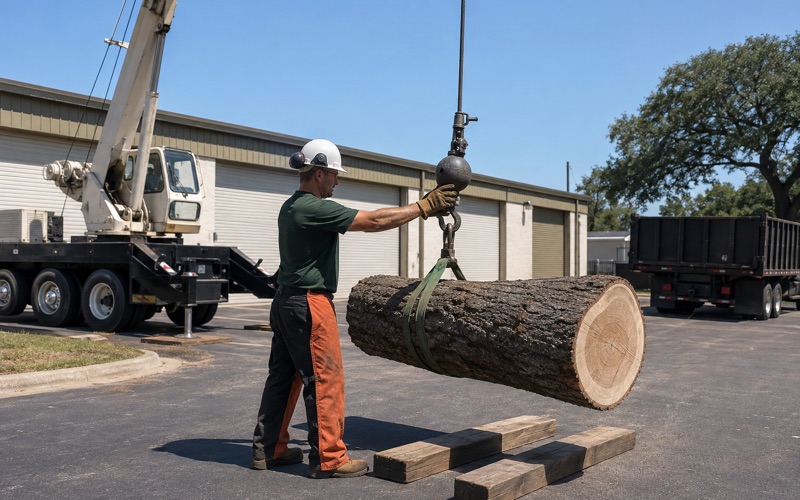
The retained canopy, not the tree coming out, is usually the real constraint on an Oak Hill removal. We plan access around the tree protection zones the permit assumes and run compact tracked equipment that fits through a back-yard gate, so a subdivision tree does not become a much larger operation dragged across a lawn full of trunks the city expects to still be standing. The work is done to the ANSI Z133 safety requirements, and where we prune rather than remove, to the objectives and cut types the ANSI A300 standard defines. We do not top trees.
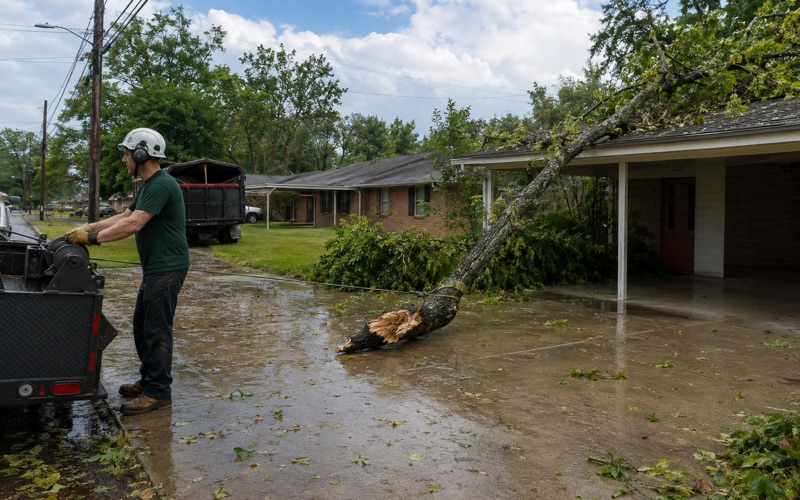
We also check which utility serves the address before quoting anything near a line. After the January 2026 ice storm, Nashville Electric Service expanded its clearance from ten feet below the lines to fifteen feet for all species, in a horseshoe pattern, and stopped ground-to-sky trimming. Metro Council urged a pause on the blanket fifteen-foot rule and NES declined at its board meeting, so the trimming was not paused and what stands near your service drop may already be scheduled to change.
That storm is why a good share of these calls exist. Ice ran from a glaze to more than half an inch across the area, as many as 230,000 Nashville-area households lost power, and Radnor Lake closed with more than seven miles of trails blocked by downed trees and debris. Ice loading, not wind, is the failure mode this ground is exposed to, and we plan storm response around what this area actually records.
Where the wood and the chips go
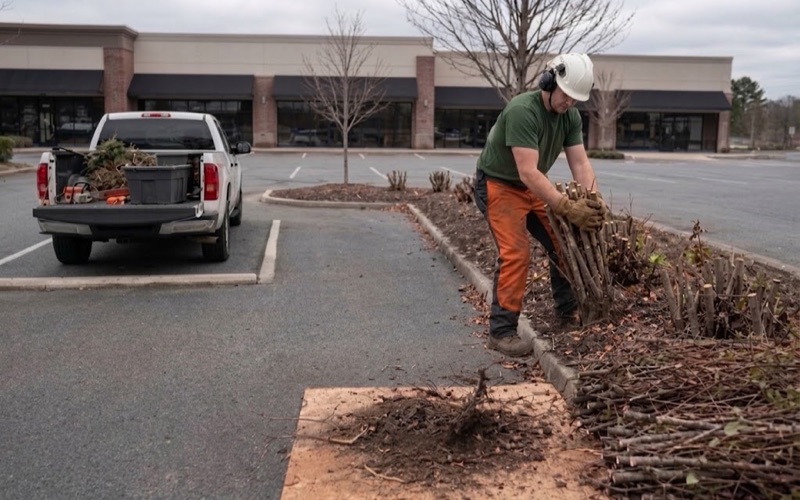
Metro Nashville does not collect brush in self-incorporated satellite cities, and all yard waste is banned from Davidson County trash collection. The city fills that gap with contracted monthly collection of typical yard waste — limbs and shrubbery pruning, no roots or dirt — but that program exists for what a homeowner prunes, not for what a contractor cuts. We haul our own debris, and we price disposal for the county the job is in, because the gates here charge by the ton in one county and by the cubic yard in the next.
Chipped material in Oak Hill has a named destination as well. Trees to Trails, a partnership among Radnor Lake staff, the city and Clean Earth, now takes storm-damaged branches and removed limbs alongside the January tree drop-off and turns them into trail mulch that holds down sedimentation and keeps the busiest paths from widening into mud.
- 20+ Years in Middle Tennessee
- Free Written Estimates
- ANSI A300 Pruning, No Topping