Smyrna Tree Removal has handled tree service in Murfreesboro for more than twenty years, and the question we answer first on almost every job here is a legal one rather than a horticultural one: who actually has authority over this particular tree. The answer in Murfreesboro is narrower than most homeowners expect, and it usually works in their favor.
We remove, prune, cable and grind stumps across six counties, which means we read the tree ordinance for the city the tree really stands in rather than carrying one city’s rules over the line with us. Murfreesboro has its own ordinance, its own City Arborist and its own citizen Tree Board, and not one of the three governs a healthy tree standing in a private back yard.
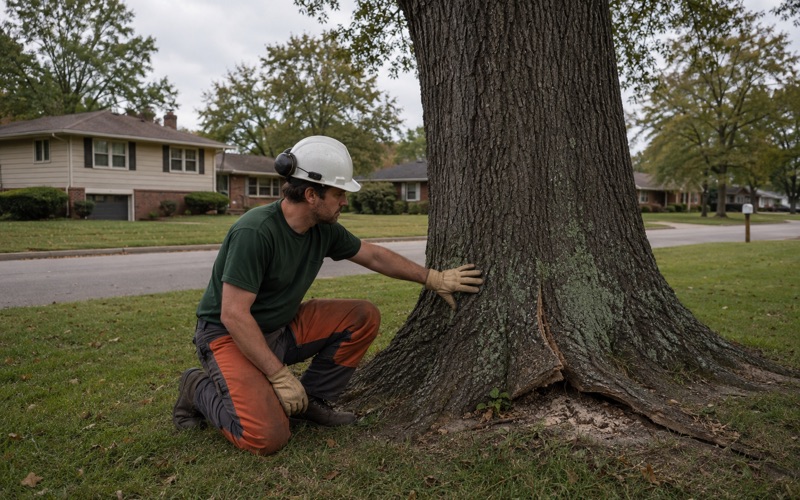
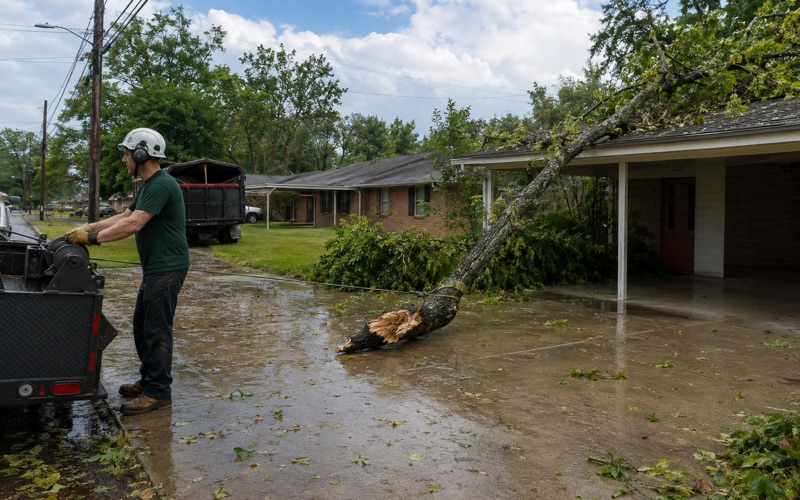
What the city does run for private property is a hazard tree program with money attached to it. Between that program and the ordinance’s nuisance provisions, the two situations a homeowner here is most likely to face are handled by completely different machinery: a tree that has turned dangerous, and a tree that simply has to come out. Everything below is how we work each one.
The ordinance regulates the city’s trees, not yours
Murfreesboro’s Tree Preservation Ordinance covers the planting, maintenance and removal of shade and ornamental trees in public areas. The city publishes the adopting instrument as Chapter 34, sections 34-1 through 34-10, while the Municode index lists the codified chapter as Chapter 32.5, Tree Management. It is a public tree ordinance, and the permit it creates is a public tree permit.
What actually needs a permit
Anyone other than the City Arborist, the Arborist’s designee, or a contractor working for the Arborist needs a permit before planting on city-owned property or treating, pruning, removing or otherwise disturbing a tree, shrub or plant located on city property. The application goes in not less than forty-eight hours before the work, and the applicant gives Notice of Intent to Excavate to Tennessee One Call under T.C.A. 65-31-101 et seq. That step is named in the ordinance directly, and it reaches stump grinding and root excavation rather than planting alone.
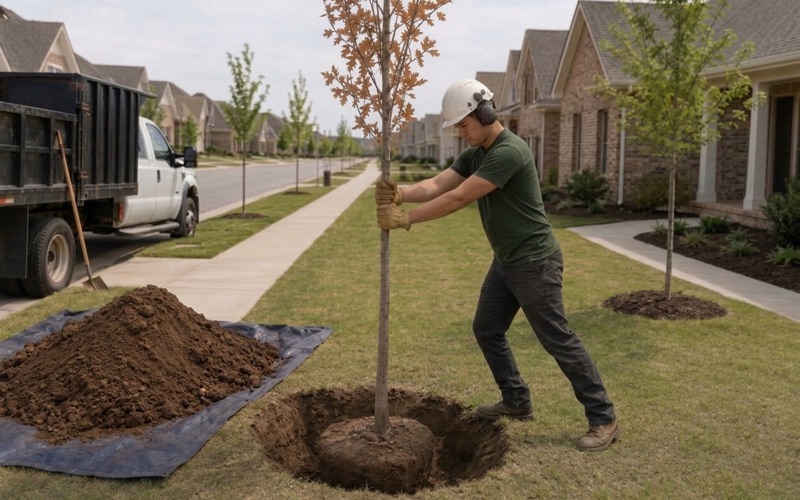
The permit itself is issued at no cost. It carries a definite expiration date, a violation of any of its terms renders it null and void, and a notice of completion goes in within five days so the work can be inspected. Taking a tree out of the treelawn is its own case: no property owner may remove one without first applying for and procuring a permit, and the owner bears the cost of removal including the stump, the clean-up and the replacement trees, planted to the standards the permit sets.
Why the permit claims you have read about this city are wrong
Directory pages and lead-form sites tell homeowners here to pull a city permit before taking down a tree on their own lot, often with a trunk-diameter threshold attached to it. The ordinance does not impose that. Its reach onto private property runs through the public nuisance and abatement sections instead, which is a different mechanism with a different trigger and a different outcome. We would rather say so before the estimate than watch you chase a permit that does not exist.
The licensing question, separately
Tennessee issues no trade-specific tree care or arborist license anywhere in the state. What does apply is the state contractor license for work of 25,000 dollars or more, and the Home Improvement Contractor license the Tennessee Board for Licensing Contractors requires for residential work between 3,000 and 24,999 dollars in the nine counties that adopted it, Rutherford among them. The state’s definition of home improvement expressly includes landscaping, so it is worth knowing which side of those figures a job falls on.
Looking for tree-removal closer to Brentwood? See Tree-Removal in Brentwood.
A hazard tree on private property, and a loan against it
The ordinance does reach private ground, in two places. A tree that by reason of location or condition is an imminent danger to the health, safety or welfare of the general public is declared a public nuisance whether it stands on city land or yours. So is any tree, shrub or plant that obstructs free pedestrian passage below seven feet of clearance or vehicular passage below fifteen and a half feet, or that blocks a street light or a traffic sign. Those two figures are the working spec when we crown raise over a sidewalk or a street in this city.
How abatement actually proceeds
Written notice has to be served personally or sent by registered mail to whoever received the last preceding year’s tax bill, and it must allow no less than thirty days to eliminate the nuisance, a period the city may shorten where there is imminent danger to the public. If that date passes with the nuisance still standing, the City is authorized to abate it and file the reasonable cost as a lien against the property. The owner has a right to a due process hearing before the Tree Board, five citizen members appointed by the Mayor with City Council approval who serve without compensation, and the running of the time limits is suspended from the written request until the Board renders its decision.
The forgivable loan
Separately from all of that, the Community Development Department administers a hazardous tree removal assistance program: a five-year to fifteen-year forgivable loan to eligible homeowners for removal of trees that have become hazards, reachable at 615-890-4660. The city’s published description states the term and eligibility in a single paragraph and does not publish income limits, the forgiveness mechanics, or what counts as a qualifying hazard, so those answers come from the office and not from a contractor. What we can supply is the written tree condition report you hand to that office, to an insurer, to a neighbor or to an HOA architectural review committee.
What makes a tree hazardous on this ground
Soil here is thin over flat-lying limestone. The Barfield series, type-located in Rutherford County, runs eight to twenty inches to bedrock; the Gladeville series about three to twelve; the moderately deep Talbott series twenty to forty. Rooting depth is capped by rock, so a mature tree carries a wide but thin root plate rather than a deep one, and whole-tree windthrow rather than trunk failure is the failure mode we assess for. Those thin soils dry through summer and autumn and saturate in winter and spring, which puts the wettest ground and the ice season in the same window.
Brush a contractor cuts is a contractor’s to haul
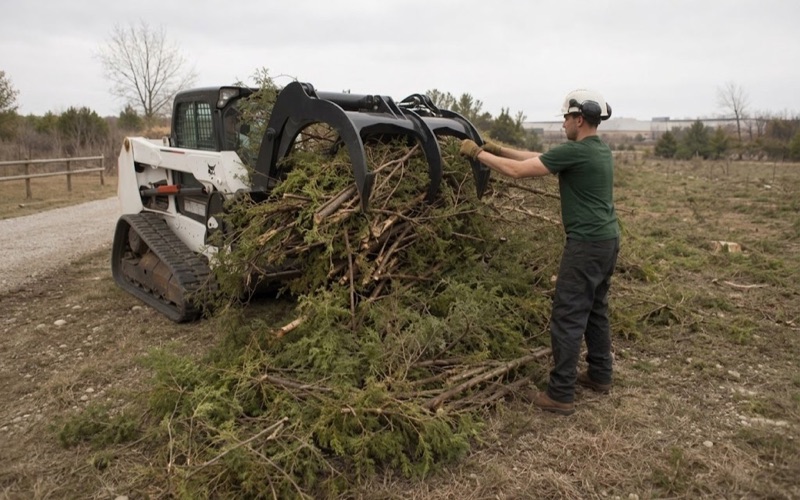
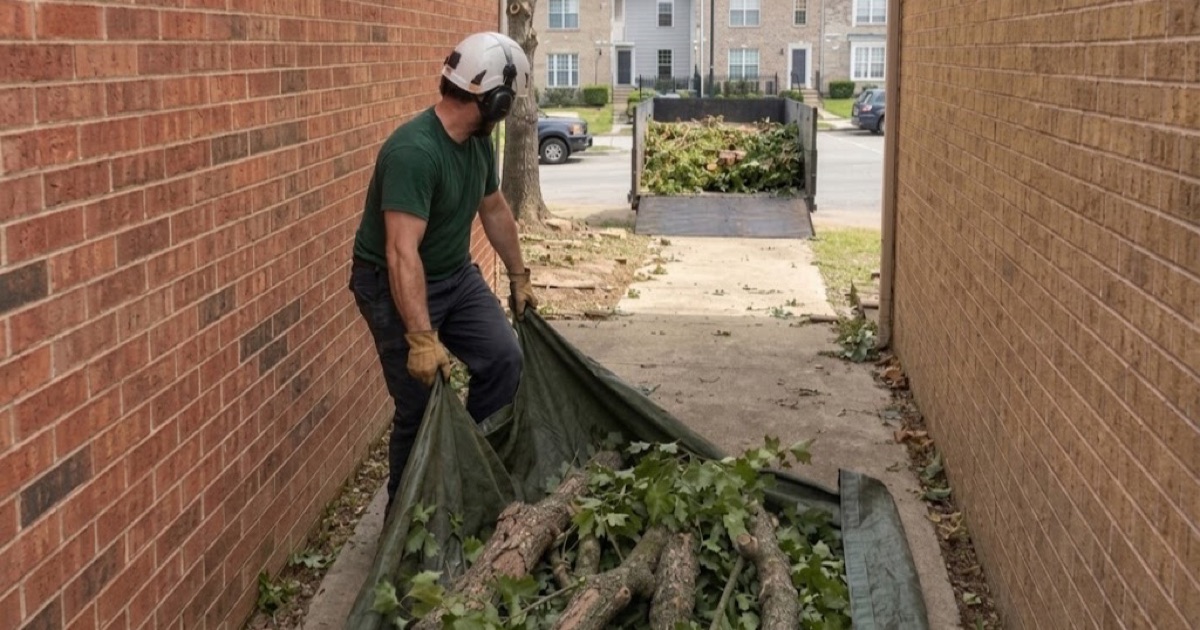
The city states on its own tree services page that anyone contracted to perform tree services is required to haul off the debris they create, according to city ordinance. That is worth knowing before you line quotes up against each other, because leaving the trunk wood stacked on site at no charge is a published practice of at least one company working in this county, and a pile the city will not collect from a contractor is not a saving.
The inclusions go in writing
We put the disposal question into the estimate rather than into the conversation: the trunk rounds, the stump, the grindings and the chips, each one named and each one priced. Disposal is a per-county number for us, because the gates around this service area charge by the ton in one county and by the cubic yard in the next, and a quote that averages the two is wrong twice over.
Stump grinding stops where the rock does
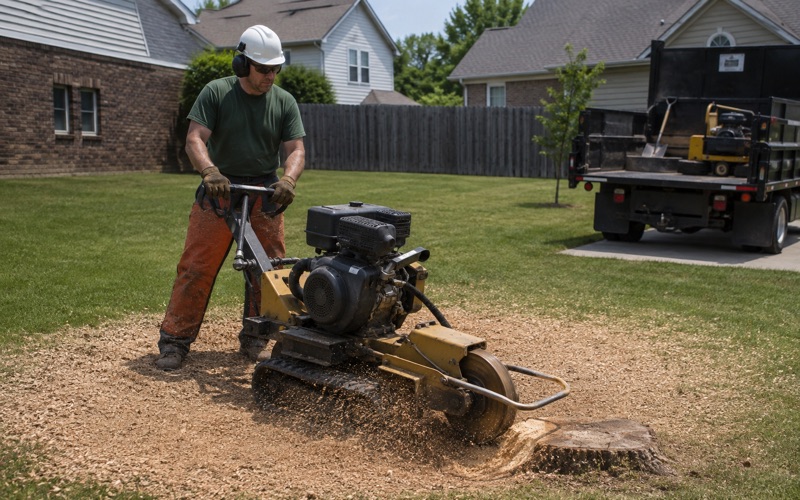
A tracked stump grinder rated to cut twelve to sixteen inches below grade will reach limestone before it reaches the bottom of the root plate on a Barfield or Gladeville soil. Grind depth here is set by the rock, not by the machine, which is why we do not promise a below-grade figure over the phone. What we will settle in advance is what happens to the hole and where the grindings end up.
Where the wood goes
Tennessee repealed its emerald ash borer, pine beetle and thousand cankers disease quarantines in 2021, so nothing restricts moving wood we cut within the state. Spotted lanternfly is worth watching rather than worrying about: the Division of Forestry map current to June 2026 shows detections in Davidson, Wilson, Sullivan, Sumner, Hamilton and Jefferson counties and not in Rutherford, though Davidson and Wilson both adjoin it. Its preferred host is tree of heaven, and the egg masses look like spattered mud.
Access, lines and the denser side of the county seat
Murfreesboro is the seat of Rutherford County, sits thirty-four miles southeast of downtown Nashville, and counted 152,769 residents at the 2020 census. The housing shows the growth: ACS 2024 five-year estimates put 12.1 percent of units in one-unit attached buildings and 52.4 percent of households in owner-occupied homes against 28,900 renter households, with only 7.2 percent of the stock built before 1960 and a median unit built between 2000 and 2009.
Getting equipment to the tree
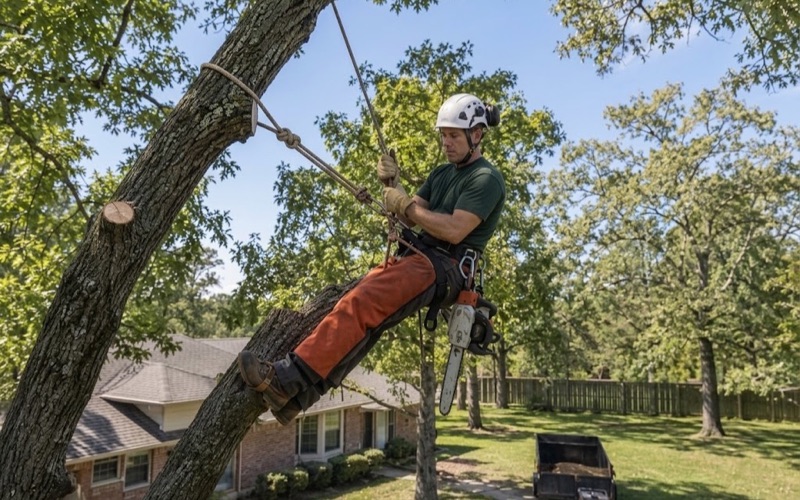
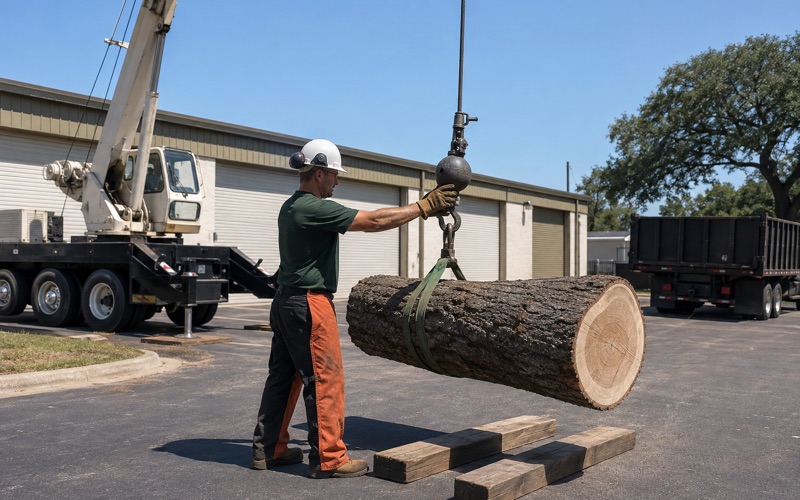
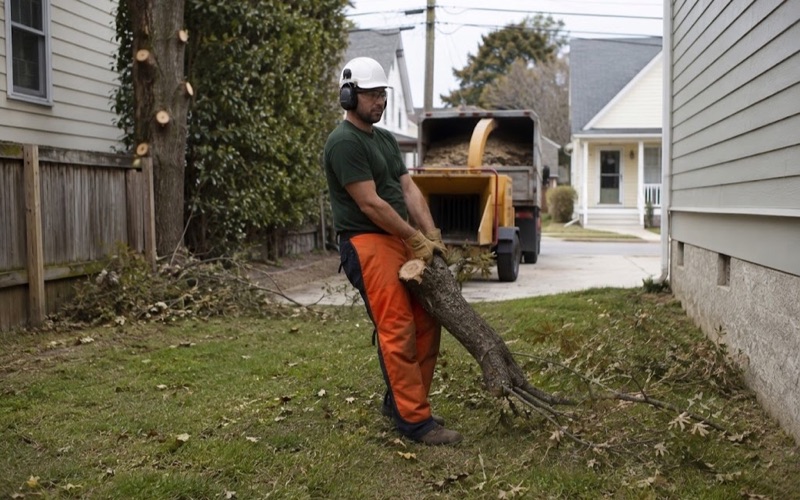
Attached and close-spaced housing means gates, shared drives and a neighbor’s fence rather than open yard. We run compact tracked equipment that fits through a back-yard gate, so a subdivision tree does not have to become a crane job, and we hold crane and rigging capacity for the heavier mature canopy where a spider lift will not do. When the pick is tight, the rigging plan is settled at the estimate rather than on the day: friction lowering device, bull rope, rigging block, working load limit.
Which utility, and how far back it cuts
We establish which of the four electric utilities serves an address before quoting anything near a line. Middle Tennessee Electric holds a cleared right of way forty feet wide, twenty feet on each side of the line, and its crews cut back and eventually remove what grows into it; its underground No Grow Zone keeps landscaping twelve feet off the front of a transformer and three feet off every other side. In the January 24-28, 2026 winter storm the Sheriff’s Office documented thirty-two downed power lines in the county, and MTE’s president described crews finishing a restoration and watching further trees fall onto the same lines as they drove away.
When we tell you not to remove it
Pruning here is worked to the objectives and cut types the ANSI A300 standard defines: crown cleaning, crown raising, crown reduction and deadwooding. We do not top trees. On a public tree, topping limbs back to stubs larger than three inches inside the crown is unlawful as a normal practice; on your own tree it is simply the work that manufactures the next hazard. Where co-dominant stems with included bark are the real defect, cabling and bracing is often the answer instead of removal, and we will say so rather than sell you a removal you do not need.
- 20+ Years in Middle Tennessee
- Free Written Estimates
- ANSI A300 Pruning, No Topping