Smyrna Tree Removal has handled tree removal in Lebanon for more than twenty years, and the first thing we settle on a Wilson County property is not the canopy — it is what sits underneath it. The stump is where a job on this ground either finishes clean or turns into an argument, because the rock here can be a hand’s depth below the turf.
That single question — how far the soil goes down before it meets thinly bedded limestone — decides the grinding method, the depth we can put in writing, and what the backfill looks like when we pull out. We answer it before the machine is on the trailer, rather than after a wheel finds bedrock with you watching.
What follows is how we read that ground, what our equipment can and cannot do in it, and why a tree on shallow soil fails in a way that the same species on deeper soil does not. None of it is theory, and all of it is the difference between a quote that holds and one that gets revised on the day.
Cedar glade ground, and what it does to a stump job
Lebanon sits in cedar glade country, on the Inner Nashville Basin side of the Central Basin, and the glades are not scenery here — they are the soil profile. Cedar glades occur across the Davidson, Rutherford and Wilson County portions of the basin, and Cedars of Lebanon State Park, State Forest and Natural Area sit in Wilson County. The city’s older nickname, Cedar City, comes from the abundance of eastern redcedar, Juniperus virginiana, which tolerates thin ground over rock better than most of what grows beside it.
The species mix follows the ground. Redcedar holds the open glade itself, while the margins carry winged elm, hackberry and the oaks that tolerate a shallow rooting depth, and the large shade trees people plant on a graded subdivision lot are working with less soil than the nursery tag assumed. That mismatch — a big-maturing canopy over a thin profile — sits behind a fair number of the removals we get called out for.
The Gladeville series is the profile that changes the work
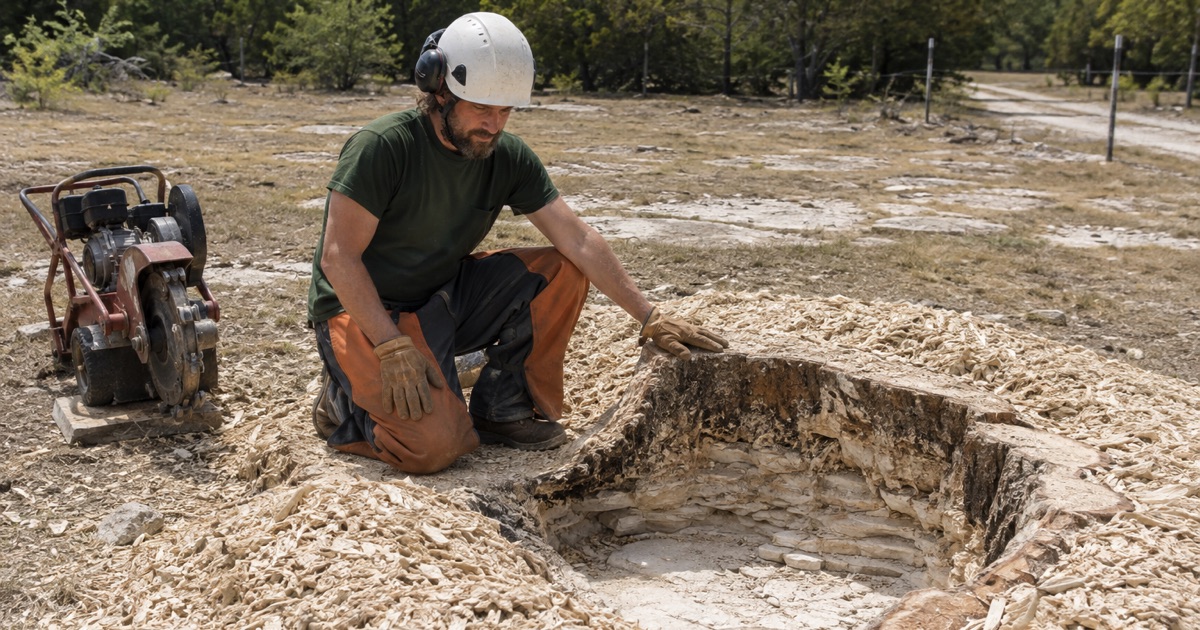
The glade soil itself is the Gladeville series, and it carries roughly three to twelve inches of clayey material over thinly bedded limestone. A tree rooted in that profile is growing in something closer to a tray than a soil column. How the tree behaves as it comes down, how much stump sits above rock, and what a grinder can reach all follow from that one number.
Why the stump, not the canopy, is the argument
Homeowners call us about the crown, and the crown is usually the straightforward part of the day. Where a Lebanon job goes wrong is at the stump, when a crew promised a depth the ground was never going to give and left a limestone shelf under a thin skim of grindings. We would rather tell you at the estimate that a particular stump will finish at six inches than have you discover it standing next to the machine.
Looking for tree-removal closer to Hendersonville? See Tree-Removal in Hendersonville.
Depth to limestone, established before the machine is on site
Depth to bedrock around this city varies enough that it has to be established per property rather than assumed. The Gladeville series runs roughly three to twelve inches to thinly bedded limestone. Talbott, moderately deep and well drained on clayey residuum weathered from limestone, runs twenty to forty inches; Bradyville runs forty to sixty; Mimosa is more than forty inches deep, which is the property that separates it from Talbott.
Where the machine’s own stop binds before the rock does
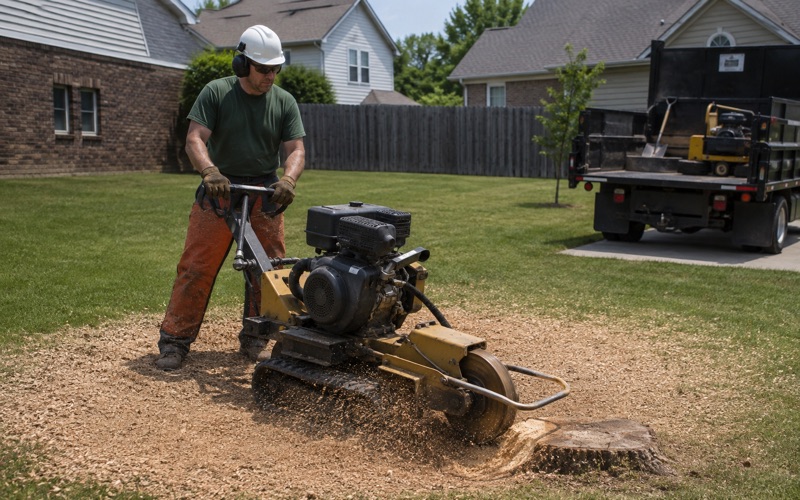
A tracked stump grinder in the narrow-access class — the machine that fits a back-yard gate, so a subdivision tree does not have to become a crane job — cuts only twelve to sixteen inches below grade. Set that against the soil ladder and the binding constraint changes with the address. On a Gladeville profile the wheel is at or past bedrock before it reaches its rated depth; on Talbott or Bradyville the grinder runs out of travel long before it runs out of soil.
So we treat grind depth as a soil question answered in advance rather than a number copied off a rate sheet. It also decides which machine comes on the trailer, since sending a larger grinder to a job that rock limits buys nothing but wheel damage.
When the grind cannot reach the depth you want
Sometimes the answer is that the depth you had in mind is not available at that spot, and the useful conversation becomes what you intend to do with the ground afterward. Sod over a shallow grind is a different proposition from a new planting hole or a footing, and only one of those genuinely has to get below rock. Where it does, the honest options are excavation and rock work rather than a second pass with the same wheel, and we would rather price that plainly than grind twice and bill for both.
The clearances that can bind before either one
Depth is not the only thing that stops a grind short. Middle Tennessee Electric, the member-owned cooperative serving Wilson County, publishes a No-Grow Zone around underground transformers of no landscaping within twelve feet of the front of the unit and three feet from all other sides, and beside a pad-mounted unit that clearance is the working constraint rather than the stump diameter. Our service area crosses six counties and four electric utilities, so we confirm which one serves the address, and we call Tennessee One Call, before a wheel turns.
We also put the inclusions in writing before we start — the trunk rounds, the stump, the grindings and the chips — so nobody is negotiating about a pile after the truck is loaded. Each of those has a cost attached to it, and settling them on paper is a great deal cheaper than settling them in your driveway.
Chert, not depth, is what dulls a grinder wheel
These two things get described as one problem and they are not one problem. Shallow rock stops the cut; chert fragments in the soil wear the teeth down while the cut is still running. A deep soil full of chert costs more teeth than a shallow soil without them, and pricing a grind as though depth alone predicted wear is how a crew ends up either eating the difference or padding the next quote.
What that means on your estimate
We look at both when we walk the property, because they push the number in opposite directions. A shallow Gladeville stump is quick and finishes shallow; a deeper, cherty profile takes longer, costs consumables, and finishes at the machine’s rated depth rather than at rock. Saying out loud which of those your yard is, at the estimate, is most of why we walk it.
Getting the debris off the property
Wilson County prices its gate by volume rather than by weight: construction and demolition waste at eighteen dollars a cubic yard and small residential yard waste at five dollars a cubic yard, cash or local check only, with every load tarped or turned away. That is the opposite incentive from a per-ton county, because bulky chipped brush and grindings carry a different cost curve by the cubic yard. It is why we price disposal for the county a job actually sits in.
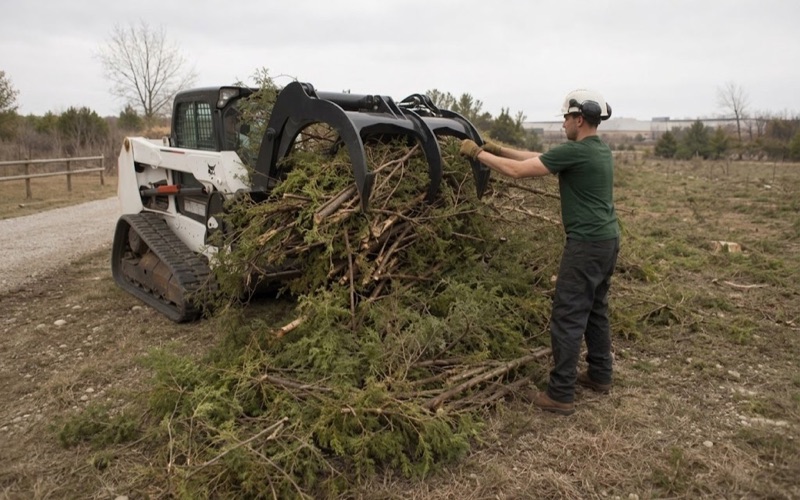
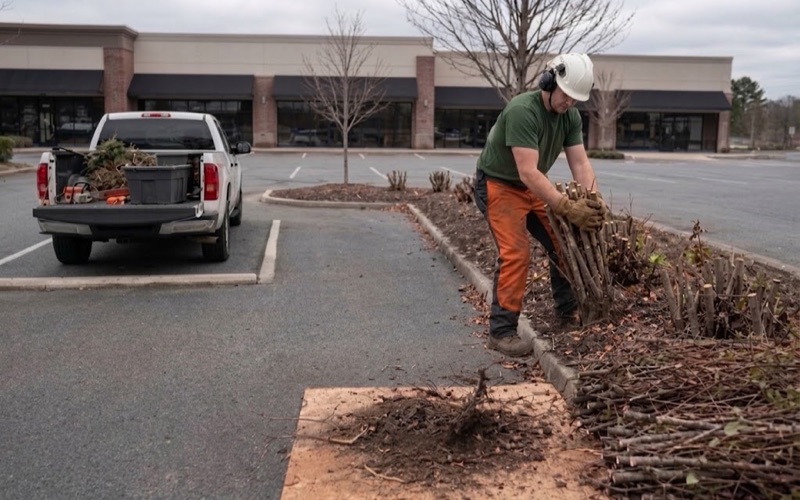
The other half of that is the city program for limbs and brush, which covers a resident’s own routine maintenance and states plainly that it does not accept contractor or commercial waste. The moment you hire a crew, your brush has left the free municipal stream. We tell homeowners so up front, and we haul it ourselves.
Why a shallow root plate fails differently in wind and ice
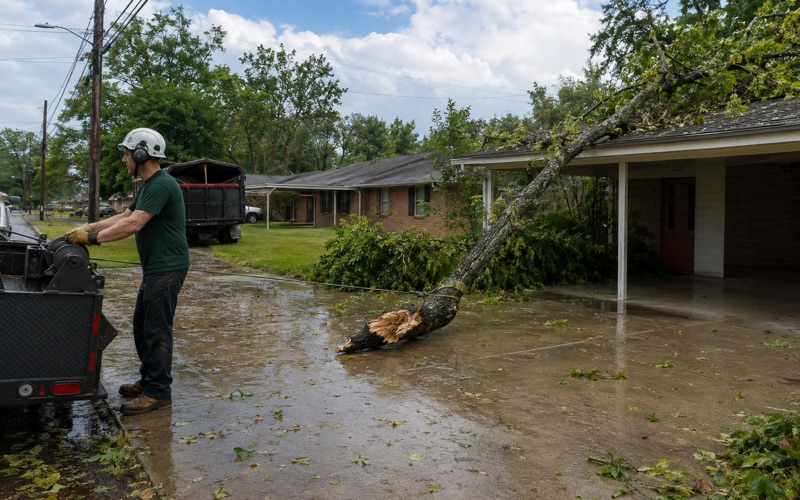
A tree that cannot root below the rock does not simply grow a smaller root system — it spreads a wide, shallow root plate instead. Add saturated ground and a wind or ice load, and the plate lifts as a unit rather than the stem breaking. That is why a glade-margin tree fails root-first while a deeper-soil tree of the same species fails at a union, usually where co-dominant stems meet with included bark.
The load cases this area actually records
We plan storm work around what Middle Tennessee measures rather than a generic script. The National Weather Service office in Nashville records an average of eighteen tornadoes a year across its area over 1995 to 2025, a derecho on June 21, 2019 crossed every Middle Tennessee county, and the ice storm of January 24-25, 2026 put a quarter to a half inch of ice and more on the region and was described as the worst in decades. Wind and ice are the load cases here, and hurricane vocabulary has no business in a Wilson County estimate.
Reading a root plate before it moves
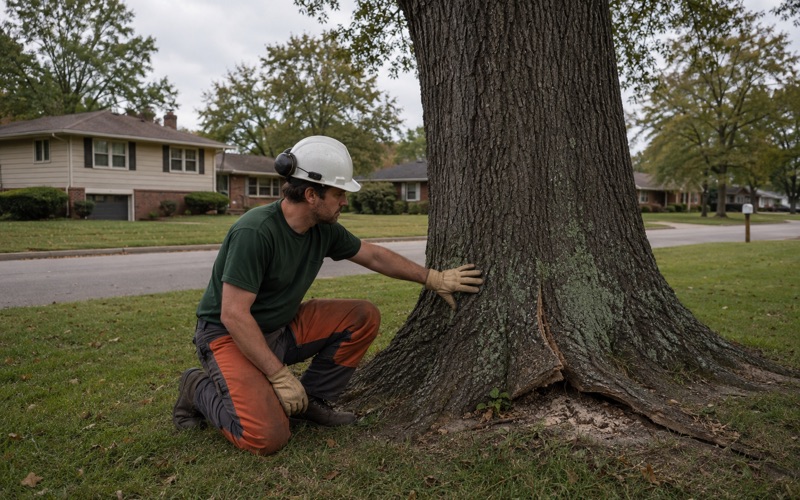
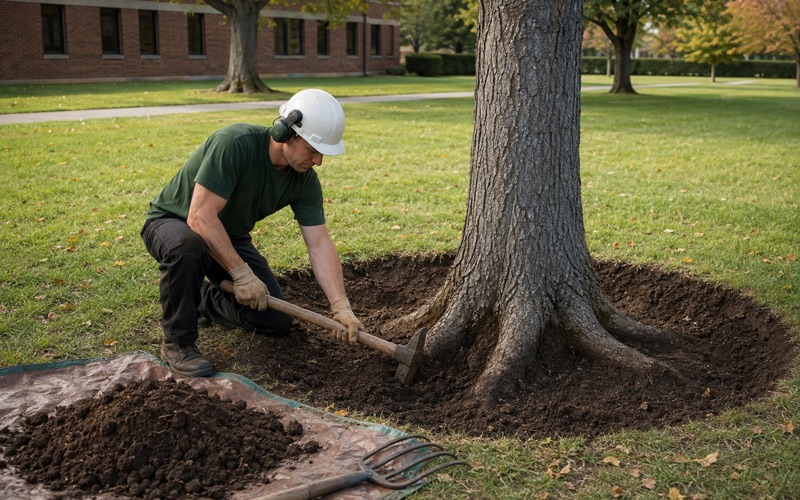
A tree risk assessment on this ground starts at the base rather than in the crown. We excavate the root collar with an air spade where the flare is buried or the plate is suspect, because a plate that has begun to move leaves evidence — cracked soil on the tension side, a heaved margin — well before the tree goes over. Where the finding supports it, cabling and bracing or a crown reduction worked to the objectives and cut types the ANSI A300 standard defines is the better answer, and we will say so; we do not top trees, and we will tell you when a tree does not need to come out.
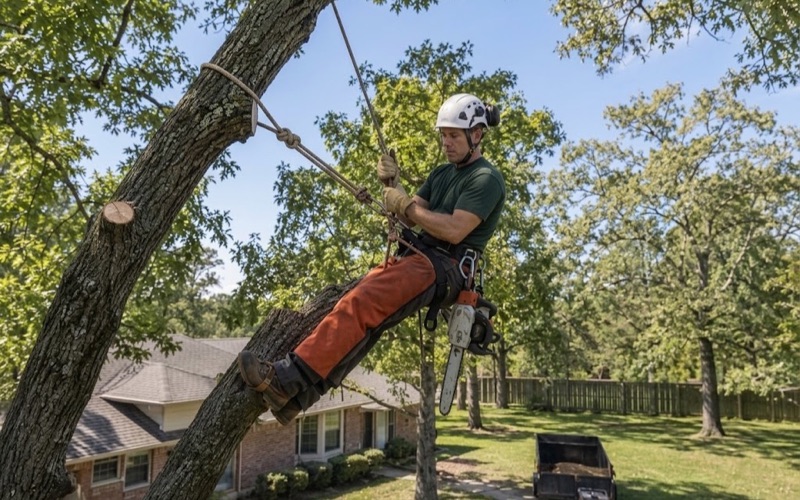
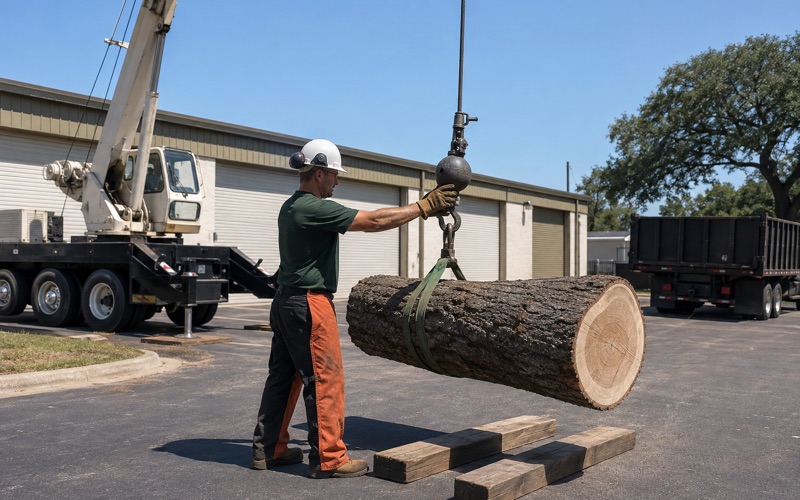
A compromised plate also changes how the tree comes apart. A stem we would ordinarily block down in large pieces gets taken in smaller ones, with a bull rope through a rigging block and a friction lowering device carrying the load, because shock into a root system that is already lifting is how a controlled removal stops being controlled. Where the plate has visibly moved, we set the rigging so the tree is never asked to hold what it can no longer hold.
After a storm, the height rules can change the answer
One local wrinkle is worth knowing before a damaged tall tree gets patched up rather than taken down. Under Section 14.402(I)(3) of the city’s zoning code, where the Airport Commission determines that a nonconforming tree has been abandoned or more than eighty percent torn down, physically deteriorated or decayed, no permit shall be granted that would allow that tree to exceed the applicable height limit. We establish whether a tree stands inside that overlay before we quote it, because the answer decides whether a badly damaged tree is a restoration or a removal.
Our written tree condition reports exist for exactly these conversations — a document a homeowner can hand to a neighbor, an insurer or an HOA architectural review committee, instead of a verbal opinion that evaporates the moment somebody disputes it. Estimates are free, and you will get a straight answer on whether a job is worth an insurance claim.
- 20+ Years in Middle Tennessee
- Free Written Estimates
- ANSI A300 Pruning, No Topping