Smyrna Tree Removal has handled tree removal in Hendersonville for more than twenty years, and on most jobs here the first thing we settle is where the wood is going. The city runs limb and brush collection for its residents, but it states in plain terms that no commercial tree-cutting will be collected. The moment a tree service is hired, the pile at the curb stops being a city matter and becomes part of the price of the job.
The second thing we settle is what the removal actually includes. We put the inclusions in writing before anything is cut — the trunk rounds, the stump, the grindings and the chips — so nobody is left standing over a pile deciding whose it is. Estimates are free, and when a tree can be cabled, braced or pruned instead of taken down, we say so rather than quoting a removal.
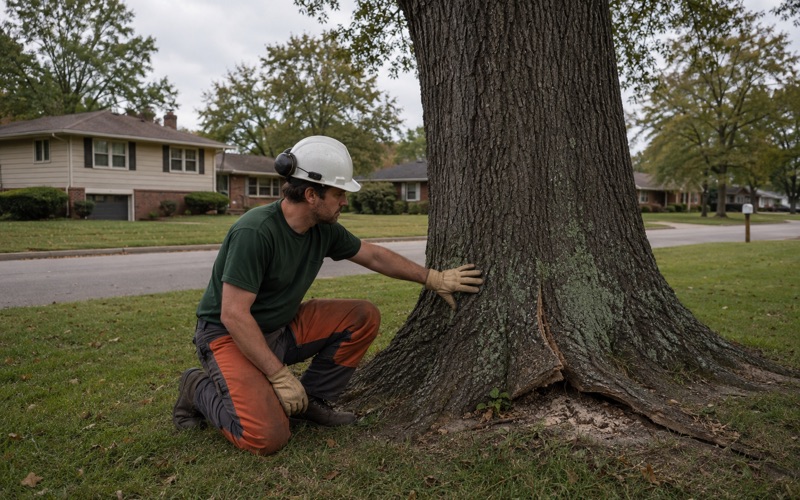
What is left is the work itself, and a good share of it here happens under old, heavy canopy standing close to the water. That changes who signs off on the job, and it changes how the takedown is planned.
Mature canopy on the lakeshore side of town
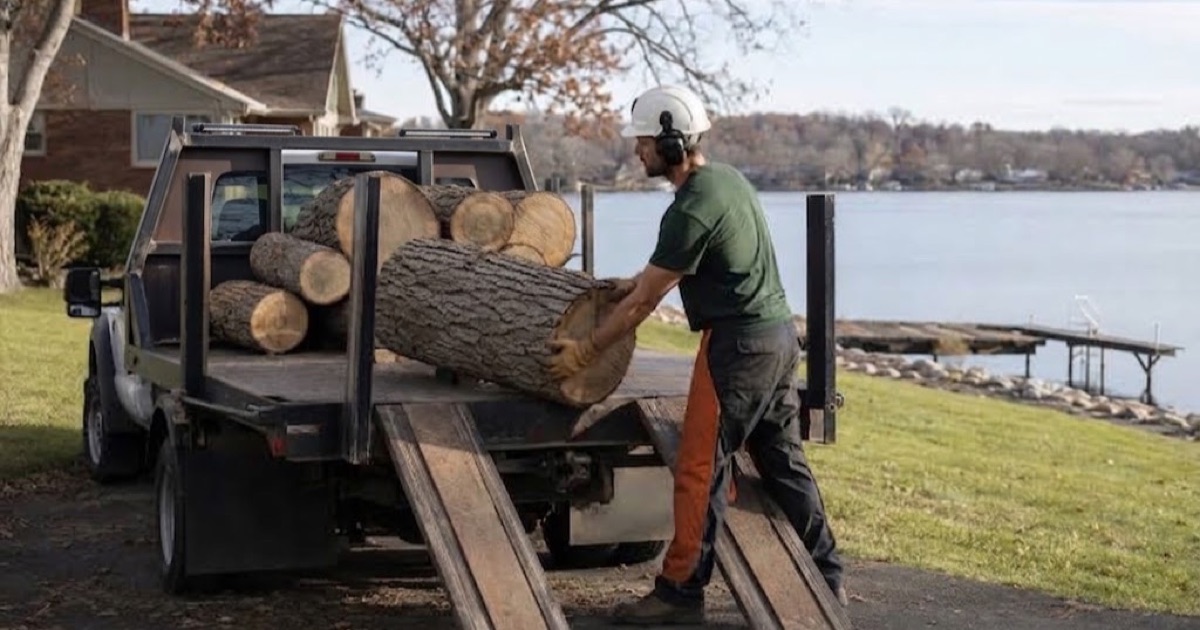
Hendersonville sits on Old Hickory Lake with about 26 miles of shoreline inside the city limits, and the trees on that bank are not the city’s to regulate. Old Hickory is a U.S. Army Corps of Engineers impoundment, and the Corps regime reaches the vegetation along it. We establish which side of that line a tree stands on before we quote it, because this service area crosses six counties and the answer changes at every one of those lines.
On Corps shoreline the answer is often no
Under the Shoreline Management Plan approved November 17, 2020, a vegetation alteration permit is required, and cutting any tree greater than one inch in diameter at the base is prohibited. Limbs may be trimmed to no more than a third of the tree’s height and never above 12 feet, mowing is capped at 100 feet or half an acre, and the roughly 36 percent of the allocation classed as Protected Shoreline allows no cutting or underbrushing whatsoever. Environmental Restoration and Conservation Areas allow no vegetation alteration permits and no tree cutting at all.
Two lines in that plan decide most lakefront conversations. Fallen trees and debris may be removed without approval, so storm cleanup and standing-tree removal are separate permission problems on the same lot. And “in no event will permission be granted to cut a healthy tree when the relocation or modification of a private structure is feasible” — a request made for the view has no permitted path, and violating a land-use permit can cancel the dock permit along with it.
That 2020 plan is still the one in force; the Nashville District opened an update in January 2026, but the published proposals concern dock frontage and shoreline erosion control rather than tree cutting, and no new plan has been approved. Paragraph 16 also covers the compliance letter a lakefront closing triggers, valid 90 days and issued within 14, which puts a sale on a clock a pending tree job can easily miss. We confirm current figures with the Resource Manager’s Office rather than quoting from memory.
Inside the lot lines, zoning district and trunk size decide
Away from the bank, removal on private property runs through the zoning ordinance, and the trigger is zoning district plus trunk size rather than species or acreage. Section 4.12, adopted as Ordinance 2025-19 on October 28, 2025, reaches trees of ten inches DBH or greater within commercial and industrial zoning; a homeowner taking down a tree on their own residential lot is not inside that section at all.
Commercial and industrial owners are, and the ladder is specific: replacement at half the removed diameter at breast height, a surveyor-stamped tree survey or a fifty-foot by fifty-foot sample, a Tree Bank contribution of $50.00 per caliper inch where replacement is not made on site, and an agreement recorded with the Register of Deeds. Section 11.4.12 adds the construction-phase layer, including fencing at the dripline and a Registered Consulting Arborist where root-zone disruption is proposed.
Two exemptions in that section are the ones we meet in the field: danger of a tree falling or damaging a structure, and written verification from a qualified specialist that a tree is dead or dying. The second is a written deliverable somebody has to produce. Written tree condition reports are something we do as a matter of course, for insurers, neighbors and HOA architectural review committees alike.
Looking for tree-removal closer to Thompson’s Station? See Tree-Removal Services in Thompson’s Station.
The city will not collect what we cut
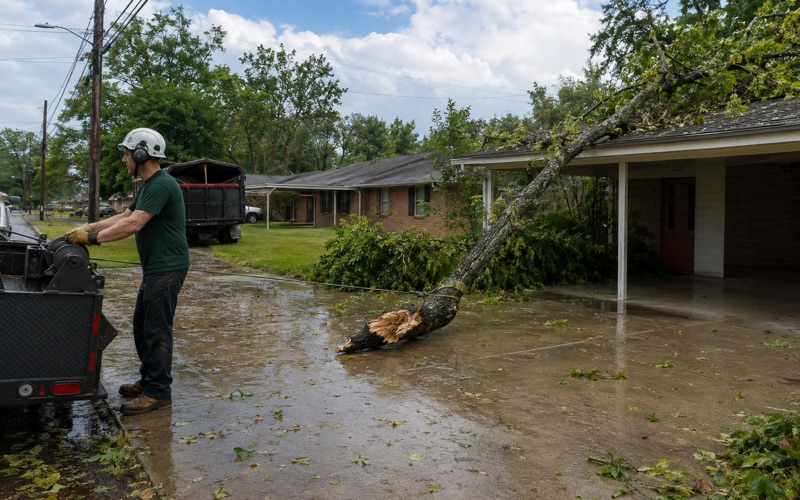
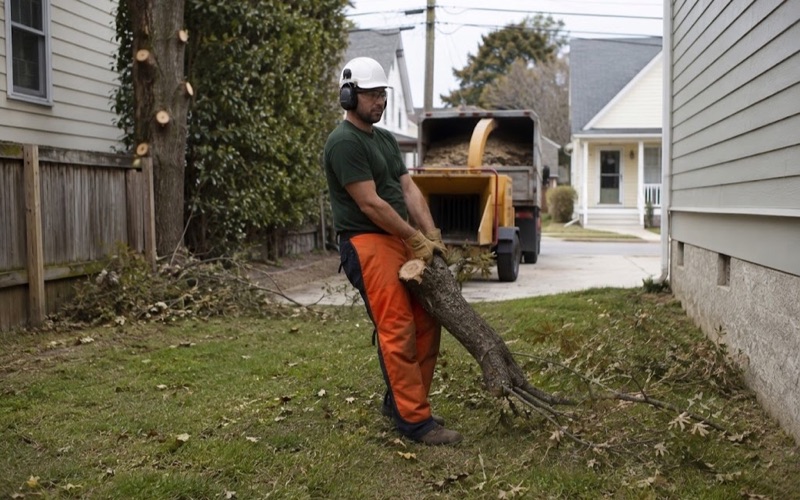
Public Works collects limbs and brush from residents on a rotating route, zone by zone, approximately once every three to six weeks depending on weather and the volume waiting. It is a real service and worth using for what it covers. It simply does not cover us: “No commercial tree-cutting will be collected by the City. If you have hired a commercial tree service, have them haul off the debris.”
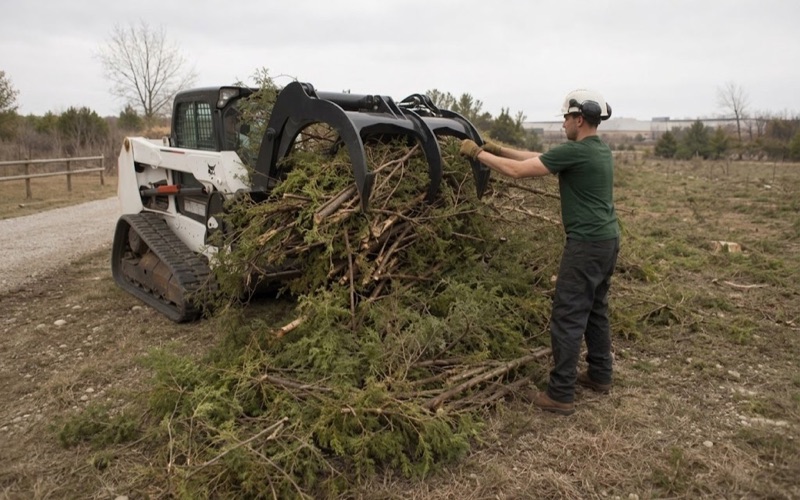
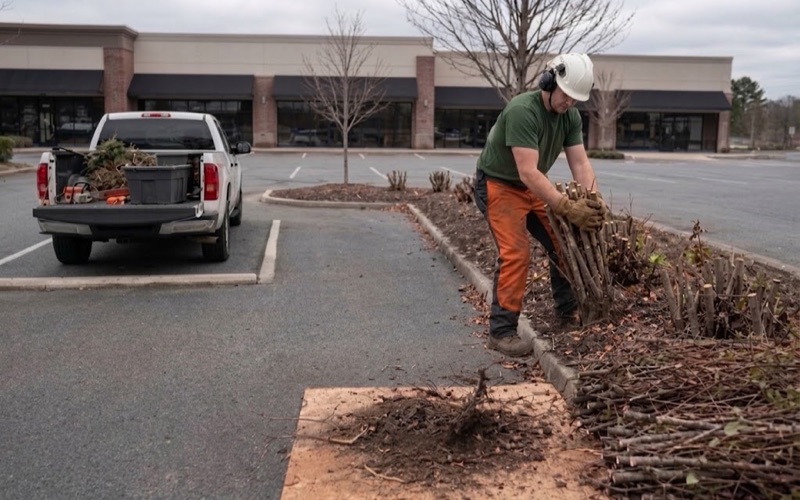
We say that before the estimate, because the assumption that the town takes the brush is the most common surprise on a removal quote here. Haul-away is priced into our number rather than left out of it, and the truck that comes to do the work is the truck that leaves with the wood.
What the eighteen-inch and eight-foot limits actually rule out
The residential rules cap limb diameter at 18 inches and limb length at 8 feet, hold the pile to no larger than ten feet by ten feet, exclude vines and root balls, and bar building materials, trash, plastic, metal, wire, cardboard, paper and glass. Small firewood-sized cut-up stumps may be collected.
Read against an actual removal, those numbers describe pruning. A mature shade tree passes eighteen inches at the butt long before anything else about it is notable, rounds cut heavy enough to be worth moving are nowhere near eight feet, and root balls are excluded by name. The limits are not an obstacle to work around; they are a fair description of yard waste, which is a different material stream from a removal.
Why that stream is strict about what goes in it
It is literal mulch. Because the limbs are ground into mulch, crews cannot collect piles carrying non-vegetation debris, which is how one length of fence wire stops an entire pile. The January 2026 ice storm showed the scale of the stream: by March 12, 2026 city and contracted crews had collected roughly 100,000 cubic yards of vegetation, aiming to release the contracted crews by mid-March, with smaller city vehicles finishing streets where the contracted claw trucks could not safely work.
Where the debris goes once the city has refused it
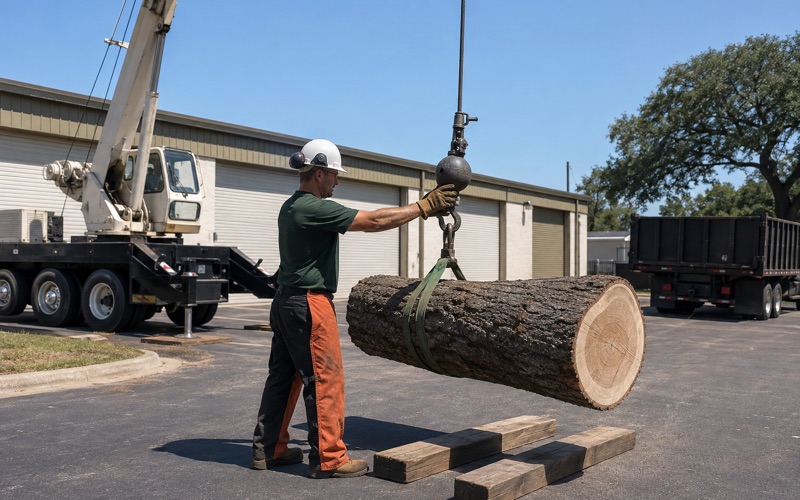
A contractor’s cut goes to a gate rather than to a curb. The Sumner County Resource Authority takes brush and cut wood by the ton, at $45 per ton against a $10 minimum, which makes disposal on a large removal a weight question rather than a truckload question.
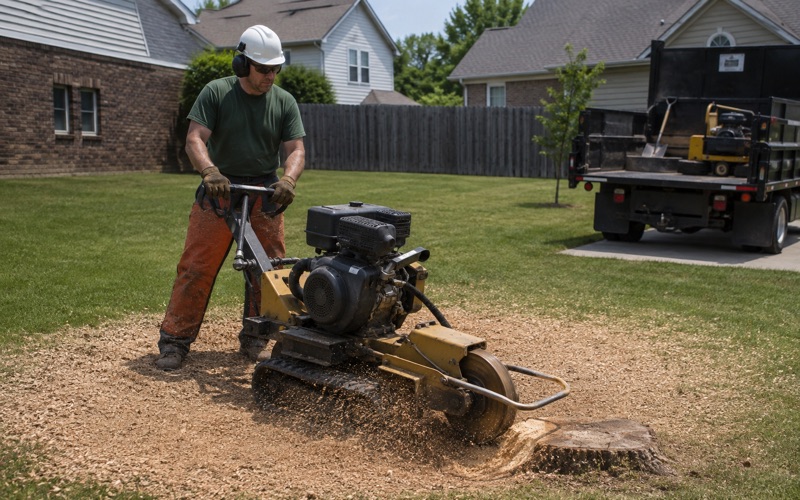
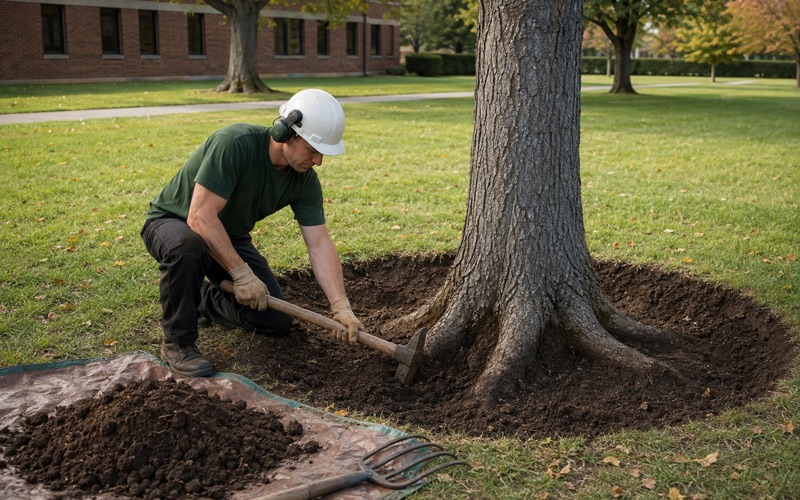
Stumps price separately from the wood above them, and the published schedules show why. Gallatin’s classes tree stumps and root balls as heavy construction at $58 per ton, against $27 per ton for brush, because a stump and its root plate carry soil and stone that limbs do not. When an estimate from us shows a separate stump line, that is what sits behind it.
We price disposal for the county a job is actually in, since the gates around this service area do not agree with one another — one charges by the ton, the next by the cubic yard. Chips are the one part of the load that often stays on site for beds, and if they are not wanted they leave with everything else.
Working established canopy on deep ground
Most of the built-up part of the city is mapped as the Harpeth-Urban land complex on 2 to 8 percent slopes, and the county soil survey names Hendersonville directly rather than leaving it to inference. The Harpeth series is described as having solum thickness and depth to limestone bedrock of more than 60 inches, and the Mimosa ground mapped alongside it runs 40 to 60 inches to rock.
That depth matters more than it sounds. A tracked stump grinder cutting six to twelve inches below grade here is working in soil rather than skating across a shelf, and a root plate has room to develop instead of being forced flat by shallow rock. The failure mode follows: on deep ground a stressed tree tends to break or shed a leader rather than lift whole, so windthrow risk on a given tree is a question about the crown, the unions and the root collar rather than an assumption about the site.
Old lots, mature trees, narrow gates
Of roughly 26,563 housing units in the city, 19,687 are single-family detached, and the largest single band of them was built between 1970 and 1979. About 9,811 units, some 37 percent, predate 1980 altogether. The canopy planted with those houses is fully grown now, and much of it is Outer Nashville Basin hardwood standing directly over a roof, a fence line or a driveway.
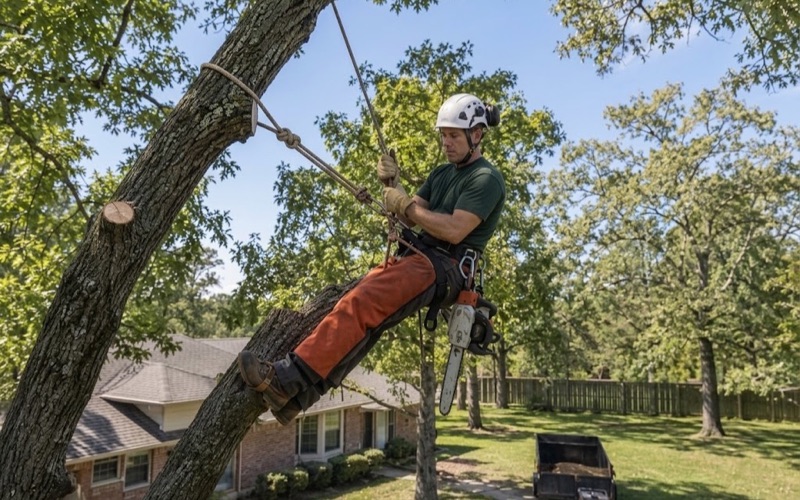
We work those lots with compact tracked equipment that fits a back-yard gate, so a subdivision tree does not have to become a larger operation than it is. Pruning is worked to the objectives and cut types the ANSI A300 standard defines — crown cleaning, crown raising, deadwooding, reduction where it is warranted — and we do not top trees. Climbing and rigging follow ANSI Z133, with the friction lowering device and rigging block sized to the piece rather than the other way around.
The storms this city actually records
Storm planning is built on what has happened here. The dated tornado of record is the Madison, Hendersonville and Gallatin tornado of December 9, 2023, surveyed as EF-2 with estimated peak winds of 130 mph along a 35.23-mile path up to 600 yards wide, and the survey’s damage language was tree language: trees uprooted or snapped, hundreds blown down. The other mode is January ice loading. Neither is a summer thunderstorm, and a plan written for summer wind is planning for the wrong season.
Line work gets the same care. Two electric distribution utilities serve the city and the city owns neither, so we establish whether an address is on Nashville Electric Service or Cumberland Electric Membership Corporation before quoting work near a conductor. Their policies differ: CEMC clears 20 feet to each side, requires a service-order line drop before anyone touches a secondary, and does not clean up storm-downed trees, while NES moved to 15 feet with no overhang in February 2026 and will disconnect service free of charge rather than remove a tree near a service line.
- 20+ Years in Middle Tennessee
- Free Written Estimates
- ANSI A300 Pruning, No Topping