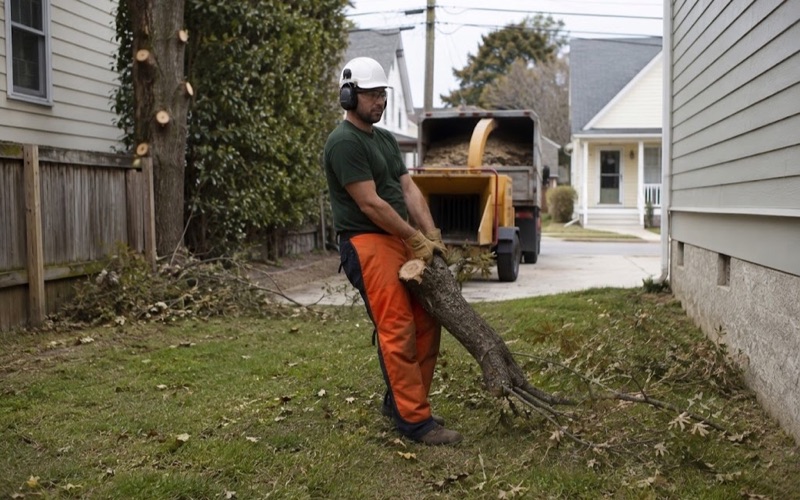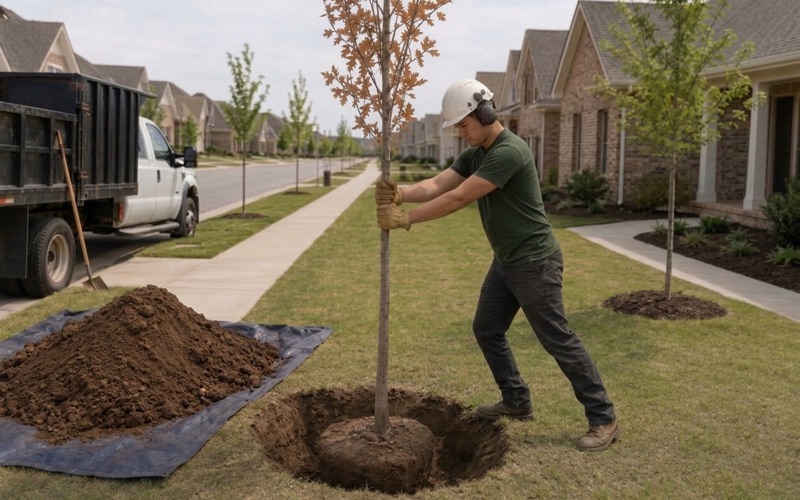
Smyrna Tree Removal has been doing tree removal in Brentwood for more than twenty years, and on these lots the size of the tree is rarely what decides the job. Lift and rigging capacity decides it. A red oak standing eighty feet behind the house on an acre of canopy is a different piece of work from the same tree in an open field, because every piece that comes off it has to be carried somewhere rather than dropped.
So the first three things we settle on a Brentwood estimate are where a machine can stand, what it can pick from that position, and what the rigging has to hold if a crane cannot reach the trunk at all. Crew size, schedule and price all follow from those answers rather than from a tape measure around the stem.
Estimates are free. If the honest answer is that the tree can be pruned, cabled or braced and kept, that is the answer you get, and you will hear it before anyone quotes you for a removal.
Mature canopy over an established lot
Brentwood is a city of detached houses on generous ground. Of its 15,557 housing units, 13,657 are single-family detached, and the residential zoning behind that sets minimum lot areas of two acres in R-1 and one acre in R-2. Almost all of the canopy here is private, and very little of it stands within reach of a truck parked at the curb.
Age matters as much as acreage. About 38.8 percent of the housing stock was built before 1990, and the median unit falls in the 1990s. Outer Nashville Basin hardwoods — white oak, tulip poplar, sugar maple, shagbark hickory — planted or left standing when those neighborhoods went in have had three decades and more to put on diameter. At that stage a tree stops being something a climber takes apart by dropping pieces onto open lawn.
Reach, not gate width, is the constraint
On a tight subdivision lot the question is usually whether a machine fits through the gate, and we run compact tracked equipment for exactly that reason: a back-yard tree a tracked lift can serve should never be sold to you as a crane job. On an acre or two the question changes shape. Now it is the distance from the nearest ground that will carry a machine to the trunk that has to come down, and what occupies the space in between — a roofline, a pool, a drain field, or the trees the owner intends to keep.
The landing area is rarely empty
Most of what we quote in this city is one declining tree inside a canopy that stays. That makes the drop zone somebody else’s root plate and lower crown rather than open grass. Setting up to place every piece deliberately takes longer than felling into a clearing, and it costs a great deal less than replacing a fifty-year-old hickory that a falling limb wrecked on the way past it.
Looking for tree-removal closer to Mount Juliet? See Tree-Removal Services in Mount Juliet.
When a tree needs a crane rather than a climber
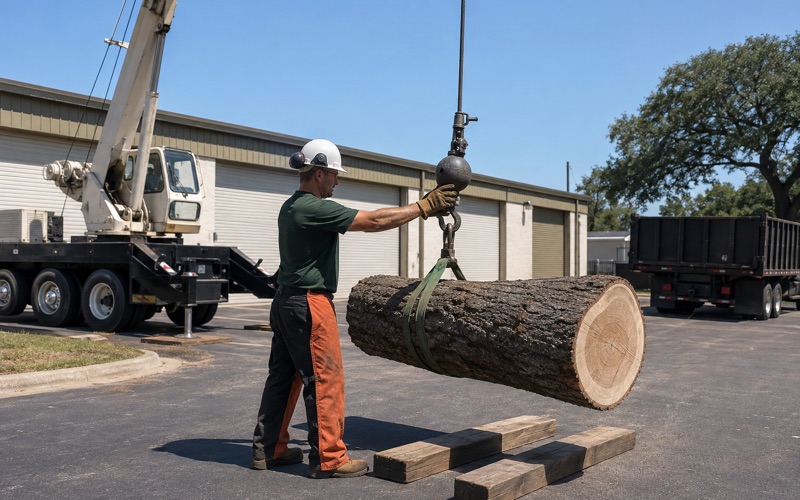
The decision to bring a crane is arithmetic, not preference. Each pick has a weight, the crane has a rated capacity at the radius it will be working at, and every part of the rigging between them carries its own working load limit. If the piece we want is heavier than the capacity at that reach, the answer is a smaller pick, a closer setup or a different machine — never optimism.
Reading the tree before the pick
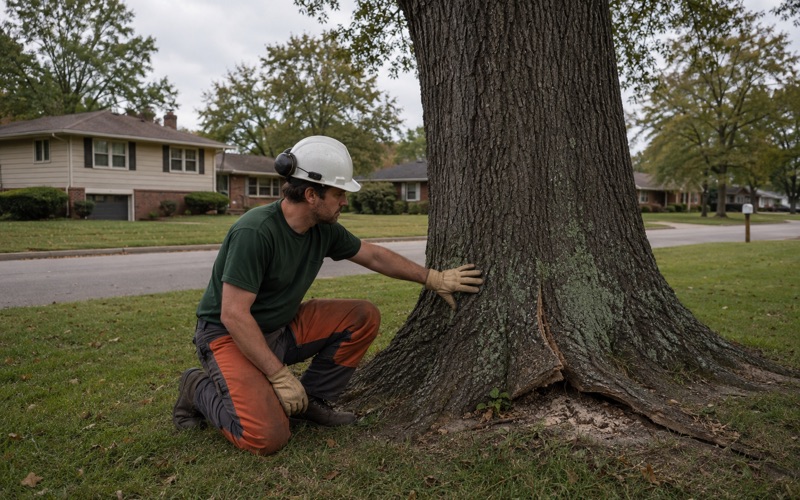
We take diameter at breast height, look at the root flare, and study the unions where the big limbs leave the stem. Co-dominant stems with included bark, a conk on the trunk, a cavity at an old wound: each of those changes where we can tie in, where we can cut, and whether the stem can be trusted to carry a load at all. A tree with a compromised union is often the exact tree that has to be picked rather than climbed, because a climber’s weight and a rigging load both have to pass through the defect.
The ground the outriggers sit on
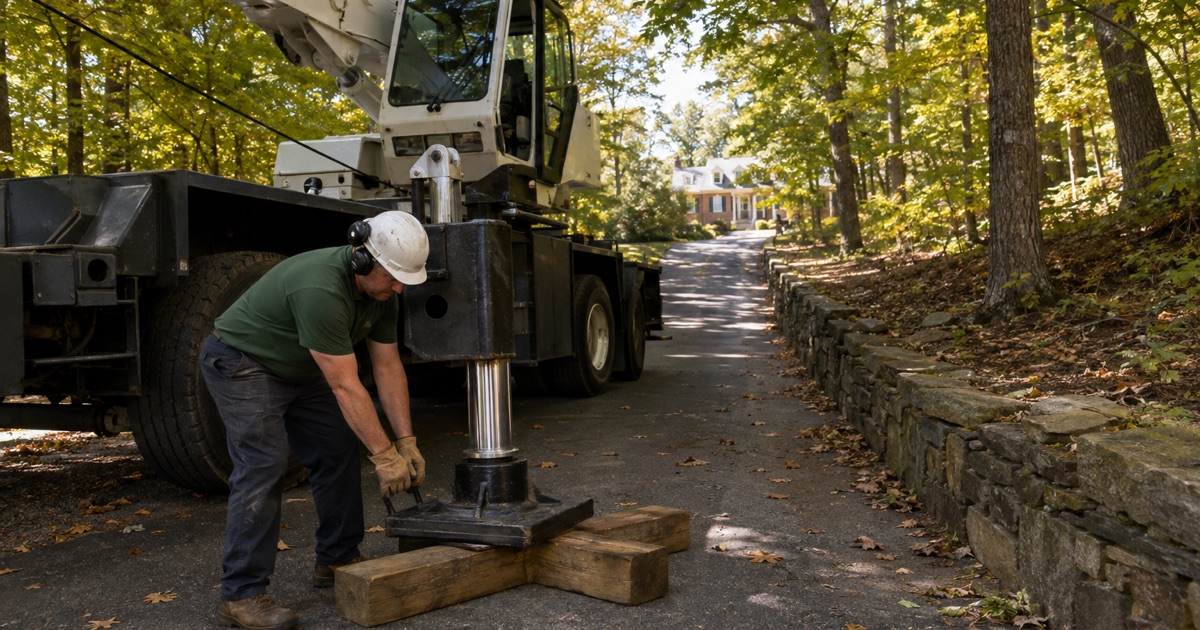
Crane-assisted removal is settled as much by the setup pad as by the canopy. Williamson County’s own soil-mapping regulation records depth to rock in inches by soil series, with worked examples in exactly that form: Talbott at 20 to 22 inches to rock on 0 to 5 percent slopes, and Ashwood-Barfield-Rock Outcrops at 10 to 26 inches to rock on 15 to 25 percent slopes.
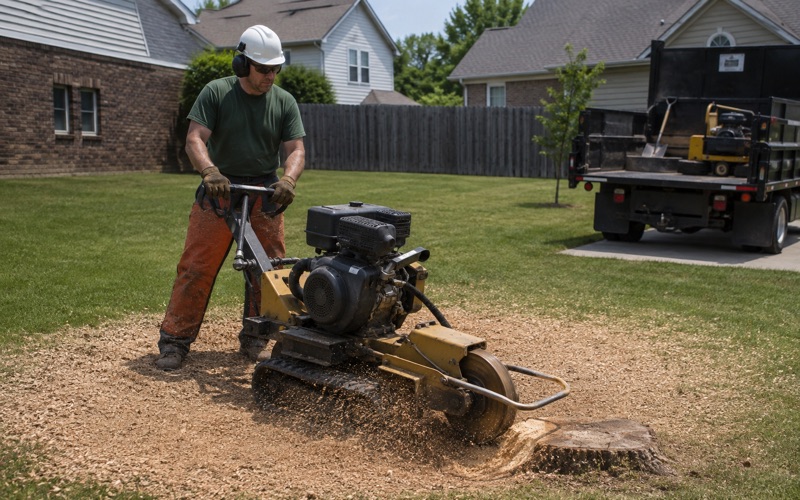
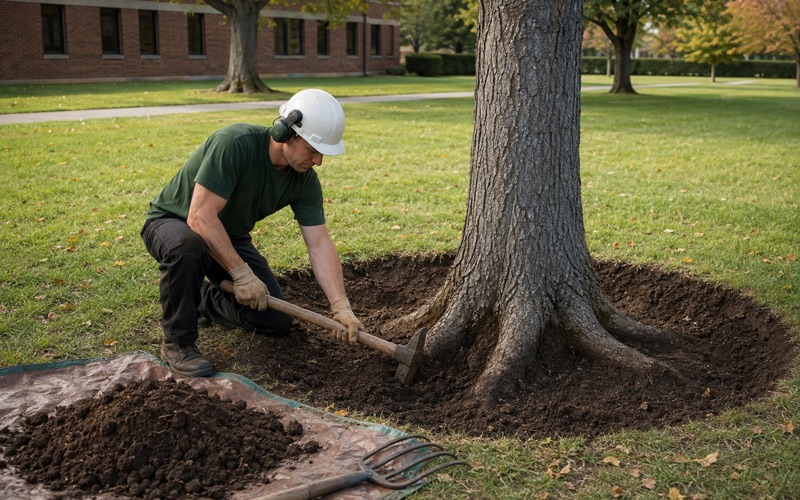
On sloped ground the pattern to expect is what that regulation calls stair-step or ledge rock, the scenario it describes as most typical of hillsides. It makes footing unpredictable across a few feet of travel, so a machine that is solid under one outrigger is not automatically solid under the next, and we would rather find that out with a probe than with a load in the air. Depth to rock is a per-parcel number in this county rather than a citywide one, which is also why we probe before quoting a grind depth — a stump grinder rated to cut 12 to 16 inches below grade is at or near refusal on ground mapped at 20 to 22 inches to rock.
Rigging a limb over the house instead of dropping it
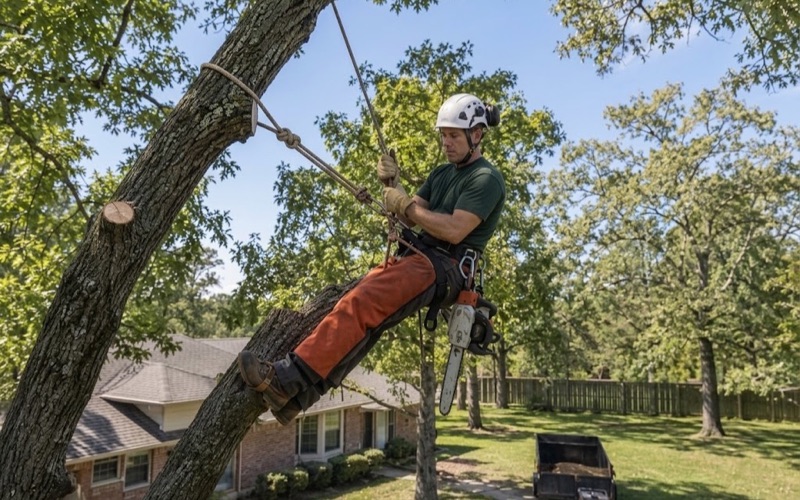
Most removals here are not single-pick crane work. They are a sequence of controlled lowers: a rigging block set high in the stem, a bull rope running through it, and a friction lowering device at the base letting each piece down at a rate a groundworker can hold.
Working load limit means the whole system
Every component in that system has a rated working load limit, and the number that governs is the lowest one. A dynamic load — a limb that falls even a short distance before the rope catches it — multiplies well past its static weight, so the block, the rope and the anchor point are sized for the shock rather than for the scale reading. Smaller pieces, shorter falls and a second lowering point are how a limb comes off over a roof instead of onto it. We work to the ANSI Z133 safety requirements while we do it.
Lines, and which utility owns them
Middle Tennessee Electric distributes power in this city and staffs its vegetation management with certified arborists. Our service area crosses six counties and four electric utilities, so we confirm which one serves an address before quoting anything near a conductor rather than assuming the answer. MTEMC also enforces a no grow zone around pad-mounted equipment — 12 feet clear of the front of a transformer and 3 feet clear of every other side — which is worth knowing before a replacement tree goes in the ground.
Storm damage is rigging work under worse conditions
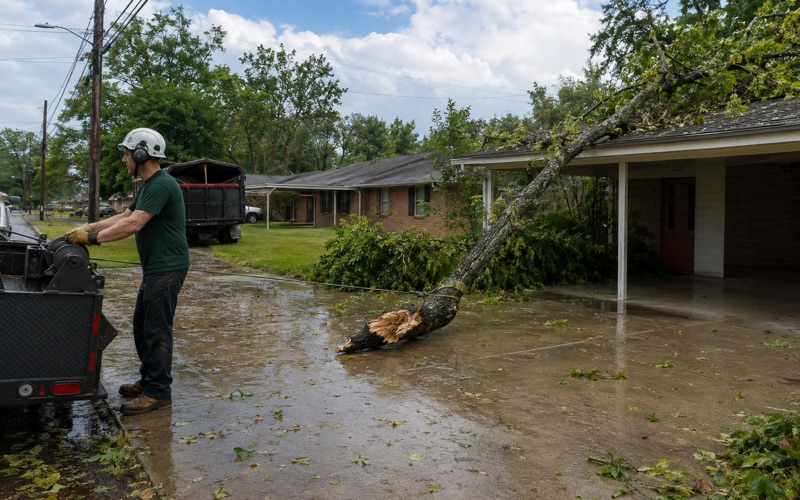
Winter Storm Fern moved through beginning early on Saturday, January 24, 2026, carrying a mixture of snow, sleet and ice; close to 15,000 outages were counted in Williamson County by the end of that weekend, and TVA dropped power to some Middle Tennessee Electric substations. Ice loading, more than wind alone, is the failure mode this canopy produces, and a limb already loaded and partly detached is the least predictable thing we rig. Our storm response is planned around the ice, straight-line wind and tornadoes this area actually records, and you will get a straight answer on whether the damage is worth an insurance claim.
Preserving a specimen hardwood instead of removing it
Not every call ends in a stump, and on a lot where the canopy is half the reason the house was bought it should not. A mature tree with one structural defect is frequently a candidate for retention.
Pruning and support, worked to a standard
Crown cleaning, deadwooding and crown reduction are prescriptions with defined objectives and cut types under the ANSI A300 pruning standard, and that is how we write and perform them. We do not top trees; the city’s own code prohibits topping on public trees, and the practice damages a private one for the same reasons. Where a union is weak but the tree is otherwise sound, cabling and bracing can carry it — an extra high strength cable or a dynamic cabling system above the defect, brace rods through it where a split has already opened. When we recommend keeping a tree, the reasoning goes into a written condition report you can hand to a neighbor, an insurer or an HOA architectural review committee.
Which trees the city holds an interest in
We read the ordinance for the city the tree actually stands in, because this service area crosses six counties and the answer changes at the line. Section 78-511 of Brentwood’s tree management article bars removal without planning commission permission of a tree designated rare or endangered by a state or federal agency, a tree of historical significance identified by the historic commission, a protected tree of six or more caliper inches deemed significant by the planning commission, and any tree inside a designated protection area within the HP hillside protection overlay district; each tree removed in violation is a separate offense. Hazards run a different route: the city manager or a designee may approve removal of a tree that threatens public safety or that has been substantially harmed by disease, wind, ice or another act of God. A public tree is different again, since removal takes the approval of the board of commissioners or its designee — the tree in the strip between sidewalk and curb is not the adjoining owner’s to authorize.
Where the wood goes
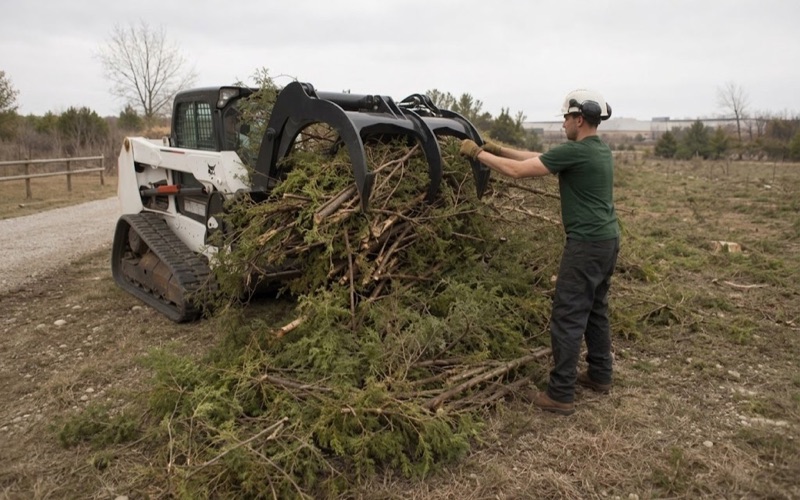
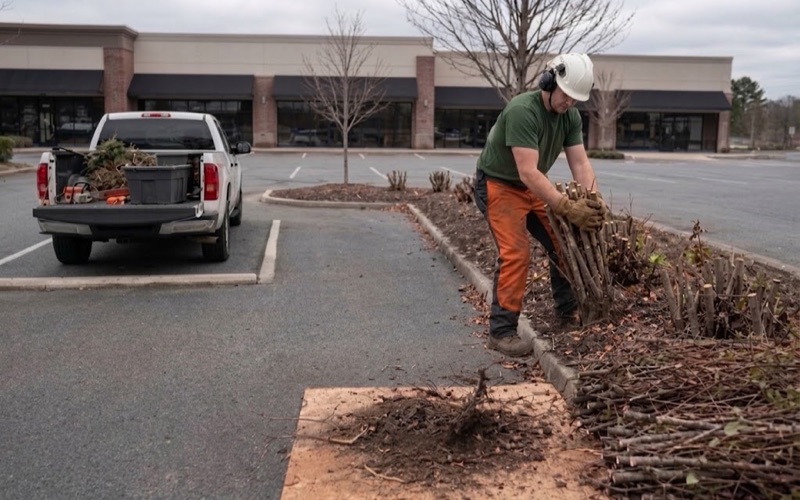
Brentwood Public Works collects brush once a month from every residential street using hydraulic grapple arm trucks, and that service exists for material a resident generated. A contractor’s cut is a contractor’s haul, and it is ours. Wood off your job goes to the Williamson County Landfill on Pinewood Road, where brush is tipped at $40.00 per ton; the county’s page states that beginning May 4, 2026 there is no free disposal there and all incoming loads are charged regular tonnage fees. Gate charges in this county are by the ton, so we price them by the ton in the quote instead of leaving them to appear later. What stays and what leaves — the trunk rounds, the stump, the grindings and the chips — is written into the estimate before the first cut.
- 20+ Years in Middle Tennessee
- Free Written Estimates
- ANSI A300 Pruning, No Topping